
Surrey transit ‘passups’ are a real problem
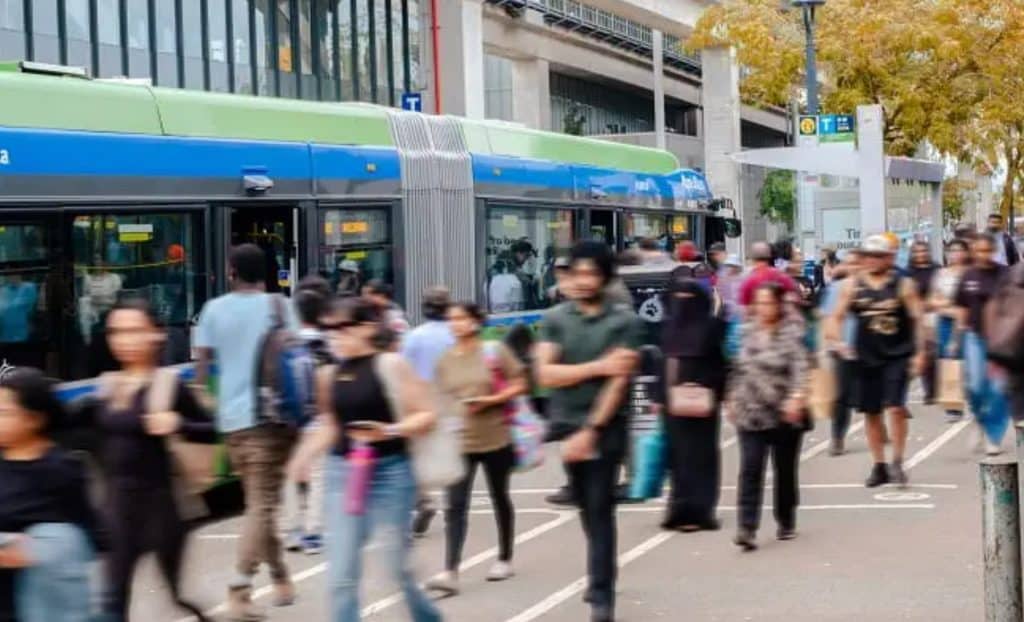
Denis Agar looks over a room of Surrey transit users and asks them to raise their hand if any of them regularly get passed up by a bus locally because it’s too full of passengers.
Nearly every single person in the room raises their hand.
“Oh, I wasn’t expecting that,” says Agar. “We still have a lot of work to do.”
Agar is executive director of the group Movement: Metro Vancouver Transit Riders. Movement was the partner for the Citizen’s first-ever event held Monday at the main Surrey library. It was called Unpacking Transit in Surrey and it was a full house as riders looked to learn more about the future of transit in the province’s fastest-growing city.
Agar told the crowd that, for the most part, Surrey “is well-positioned.”
Major projects are underway, including the Surrey-Langley SkyTrain extension and the Bus Rapid Transit route being planned along King George.
Several key plans that envision the future of transit in Surrey are also in development, including the Surrey Transportation Plan, the Surrey Transit Vision, the Official Community Plan update, and TransLink’s South of Fraser East Area Transport Plan.
But there are some glaring weak spots, Agar said.
One example was the location of the new North Surrey recreation centre, which 95,000 can now reach by transit within 30 minutes. By contrast, the old location meant 207,000 people could reach it within that same time frame.
“Where things are matters,” said Agar.
Better news is that new bus service is coming to the Campbell Heights area and a peak-only route for 68th Avenue.
What Movement is urging TransLink to do is push for more speed, capacity and frequency. That’s what attracts riders.
The problem, of course, is funding. TransLink was predicting major cuts until a temporary funding fix was found, but a permanent solution is needed.
An issue is that many politicians fight against any new funding. For example, Surrey’s Kerry-Lynne Findlay, who is running for the leadership of the BC Conservatives, announced that if she was premier, she would ban all fuel taxes for one year.
That would leave a $360-million hole in TransLink’s budget.
Meanwhile, transit riders have been hit again as the TransLink board of directors on Wednesday approved a five per cent general fare increase effective July 1.
“Transit cuts would have been devastating, but the status quo isn’t exactly peachy either,” said Agar. “Metro Vancouver has grown quickly in the last five years, but transit service hasn’t been keeping up. The result is overcrowding and passups in Surrey, significant cuts in Vancouver, and poor frequency in Langley. In all three situations, people are forced to rely on rides from family, or cars they simply can’t afford. This contributes to rising congestion and pollution.”
Surprising Stats about Surrey Transit:
Surrey’s buses alone move as many people as Atlanta’s entire transit network (regional population 1.7m), which includes a 77-km subway.
Ridership growth on many routes in Surrey has been astounding. The 323, which serves 128 Street, grew 18 per cent in 2024 alone, and is up a total of 62 per cent since 2019. The 310, which links Scott Road with Ladner, is up 120 per cent in that time.
The top-six most overcrowded bus routes in the region are in Surrey: 393, 321, 335, 345, 503, and 501. Of the top 20 most overcrowded bus routes, 14 are in Surrey.
A City of Surrey survey for their 2026 budget indicated that transportation was the number-one priority among residents, higher than public safety.
Surrey’s busiest bus route, the R6, has about as much ridership as the entire Staten Island Railway in New York City.
The R6 RapidBus was launched along Scott Road in 2024. It immediately became the 6th busiest bus route in the entire region. That year, ridership went up 22 per cent over the pre-existing local bus route.
Author


Comments (0)
There are no comments on this article.