
Surrey cyclists question ‘vision’ for bike routes in city
Surrey report casts doubt on likelihood of adding protected bike lanes
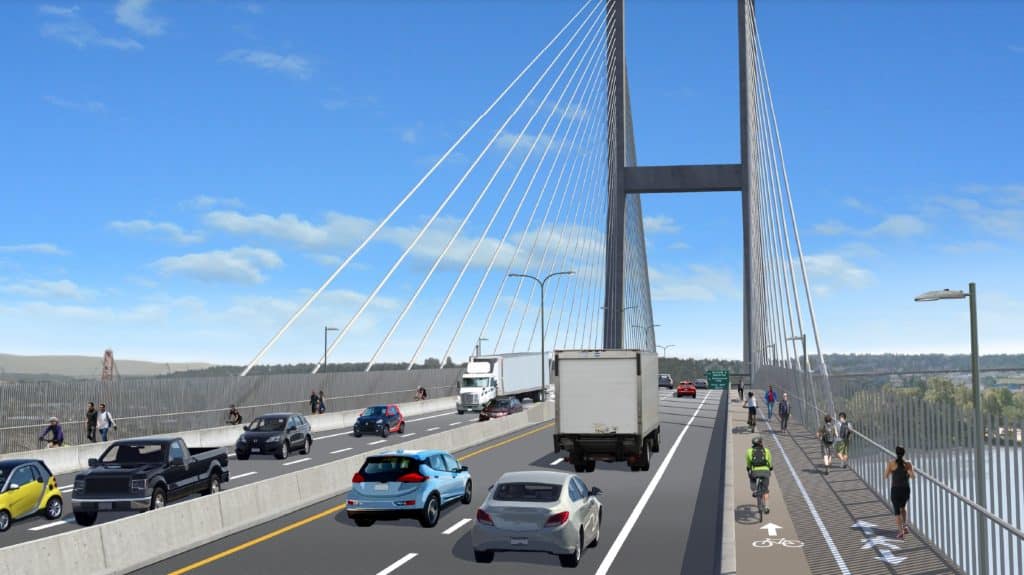
Surrey council has approved a long-term vision for cycling in the city that bike advocates think will actually reduce the overall network.
A city report says that Surrey actually has the largest network of painted bike lanes in Metro Vancouver.
“Despite this, cycling currently represents about 1% of all trips … This is influenced by Surrey’s longer average travel distances (6.2 km per trip in Surrey versus 4.4 km regionally) and the fact that many painted bike lanes run directly beside busy traffic,” said the report.
Even so, cycling in Surrey has increased by 56% between 2017 and 2023, reaching roughly 19,000 daily trips; the second highest total in the region after Vancouver, said the report.
“Over the past decade, the City’s Roads and Traffic Safety Utility Levy has helped speed up delivery of cycling improvements, particularly near transit corridors and in town centres,” said the report.
The cycling group HUB Surrey-White Rock want more protected bike lanes, but the city says that is difficult.
“Upgrading Surrey’s painted bike lanes to protected lanes, where cyclists are physically separated from vehicles, remains difficult, especially on busy arterials and collector roads,” said the report. “Converting the entire existing painted lane network to protected facilities is estimated to cost about $1.5 billion (based on current costs) and would take more than 150 years at typical delivery rates. For these reasons, the City needs a clear, practical plan to upgrade and expand the cycling network, one that reflects the true cost of protected infrastructure and balances cycling investments with other transportation priorities.”
The new Surrey vision for cycling planning focuses on three points:
- Connecting Surrey’s town centres.
- Improving access to rapid transit
- Linking people to key destinations like parks, community centres, and grocery stores.
“In total, the Vision identifies 353 kilometres of cycling facilities forming Surrey’s cycling network where cycling facilities will exist,” reads the report. “This network includes 266 kilometres (75 per cent) of protected facilities, 29 kilometres of painted bike lanes and 58 kilometres of local bikeways. Of this, 178 kilometres are already in service, and 175 kilometres are proposed for long-term delivery over several decades.”
This 175 kilometres figure carries a pricetag of $300 million to $400 million and would take several decades to complete.
HUB has been trying to rally its members to speak out against the plan.
“Surrey is planning to cut (some) cycling routes completely and have a much smaller network,” said Tim Yzerman, with the HUB Surrey-White Rock group. “Surrey is removing bike lanes to widen roads … The next phases of 132 Street project (76 to 84 Avenue) will not include cycling infrastructure at all and the existing painted bike lanes will be removed.”
Several cycling projects are currently in design or construction and are expected to be delivered within the next 10 to 15 years. These projects will add approximately 4.8 km of protected cycling facilities over the near-term and 36 km in the longer-term, closing key gaps in City Centre, Guildford Town Centre, and along the BC Parkway near the new Riverview Bridge.
Author


Comments (0)
There are no comments on this article.