
Inquest set in shooting death of Haida Elder by Surrey RCMP
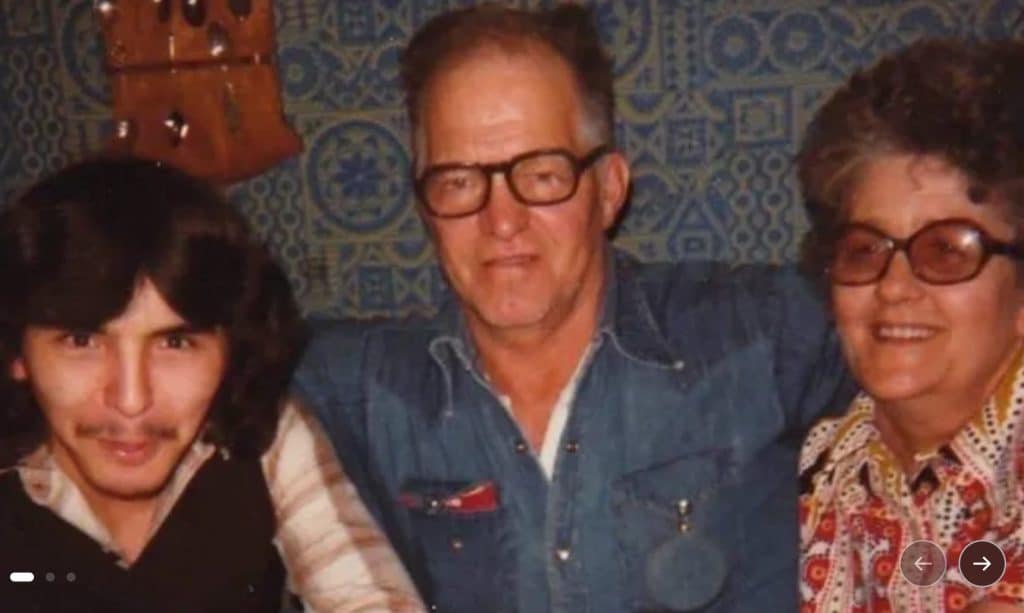
An inquest is set to start on Monday into the death of Haida Elder Jimmie Johannesson, who was shot to death by Surrey RCMP during a wellness check in Whalley in 2022.
Johannesson was 61 years old when he died due to multiple gunshots by police officers.
Under Section 18(2) of the Coroners Act, inquests are mandatory for any deaths that occur while a person was detained by or in the custody of a peace officer.
BC Civil Liberties Association, Pivot Legal Society, and the Union of BC Indian Chiefs all issued calls for changes to how police deal with wellness checks of someone suspected of being in a mental health crisis in the wake of Johannesson’s death.
Johannesson’s sister, Ruby Marks, and Laura Holland, founder of Justice for Jared, sent a letter to the province in 2022 making recommendations for the Ministry of Public Safety.
Those changes include putting resources into creating mental health emergency teams trained to deal with such situations.
“Elder Jimmie called police that morning out of concern that he was a danger to himself. In response to this Elder’s call for help, the Emergency Response Team (whose officers wear military-style uniforms) and armed RCMP Officers were dispatched and surrounded his home,” said the letter. “The RCMP’s lack of training around mental health, de-escalation and safe disarming techniques then saw them opening fire in his home where Jimmie was shot in the arm, leg, and twice in the heart. What began as a desperate cry for help ended in a senseless tragedy at the hands of the state when Jimmie was pronounced dead at the hospital.”
The letter also wants to eliminate police from taking part in wellness checks. But the murder of Burnaby RCMP officer Shaelyn Yang, who was stabbed while conducting a wellness check in 2022, highlighted the risks to anyone who is part of a team that conducts such checks.
A coroner’s inquest is a non-fault-finding public inquiry that serves three primary functions:
to determine the facts related to a death, including the identity of the deceased and how, when, where and by what means the individual came to their death, as well as a classification for the death;
to make recommendations, where appropriate and supported by evidence, to prevent deaths in similar circumstances;
to ensure public confidence that the circumstances surrounding the death of an individual will not be overlooked, concealed or ignored.
Here are the recommendations from the BCCLA:
1. Wellness Checks
- Eliminate police officer involvement in wellness checks. Reallocate resources to a peer-led mental health emergency response team trained in de-escalation and professional mental health professions whose practices are rooted in and informed by the community, all while prioritizing crisis support and care for the distressed person or family
2. Police Services
- Implement the recommendations of the Special Committee on Reforming the Police Act, per UBCIC Resolution 2022-26
- Establish a civilian traffic and bylaw services division. Armed and uniformed police are unnecessary for traffic-related offences, especially given that police are more likely to stop Black and Indigenous people for traffic infractions and many of those infractions escalate and end in murder.
- End police checks. The practice of police conducting street checks outside of an investigation is discriminatory and violates people’s privacy, exposing them to further surveillance and potential criminalization.
- Establish explicit, sanction-backed legal duties for police to cooperate with IIO investigations and for police and the IIO to safeguard evidence.
3. Indigenous Justice
- Implement the Calls to Action report released by the National Inquiry into Missing and Murdered Indigenous Women and Girls
- Implement the National Indigenous Justice Summit’s Immediate Action Plan
- UBCIC has previously called for a robust National Indigenous Justice Strategy; these recent and ongoing actions indicate this is still sorely needed
4. Independent Investigations Office
- Appoint an Indigenous Civilian Monitor, or a separate board of Indigenous Civilian Monitors, to oversee each investigation where an Indigenous person is identified as a victim or affected party in an incident of death, serious harm, or reportable injury
- Recruit Black and Indigenous investigators with knowledge of the lived experiences of these racialized communities
5. Use of Force/Militarization
- Restrict firearm possession to a small percentage (<5%) composed of specifically and highly trained officers
- Each municipal police force, in addition to regional RCMP detachments, are to establish a public database of use of force statistics and mandate a quarterly community review and audit of each use of force incident
- End the training, use and abuse of police K9 units
- Implement a mandatory policy for police body cameras to be worn by every municipal, provincial, and federal police member, at all times, while on duty. We recommend that the individual officers are unable to turn their cameras on and off on their own.
- Demilitarize the police. Use of tactical police units in Canada has grown by 2000% since 1980, with services increasingly used for routine activities such as executing warrants, traffic enforcement, community policing and responding to mental health crises and domestic disturbances.[2] Eliminate funding for and donations of militarized equipment, such as assault rifles and Tactical Armoured Vehicles[3], and any training or education in surveillance or military force tactics that harm community
Author




Comments (0)
There are no comments on this article.