
‘Get out of Surrey’s way’: Mayor slams Metro Vancouver plan
Metro Vancouver is seeking provincial approval to reduce the size of its board of directors, but Surrey’s mayor isn’t happy about the decision because it doesn’t go far enough.
The board voted on Friday to reduce its size by nearly 25 per cent in the next term, taking it from 45 directors to 34.
The board voted in favour of capping the number of directors at three per member jurisdiction while maintaining weighted voting.
“Analysis of this option identified that it could improve decision-making speed, efficiency, and strategic focus while maintaining proportional representation,” said a Metro Vancouver statement. “It was the option most preferred during engagement on the size and structure of the Boards.”
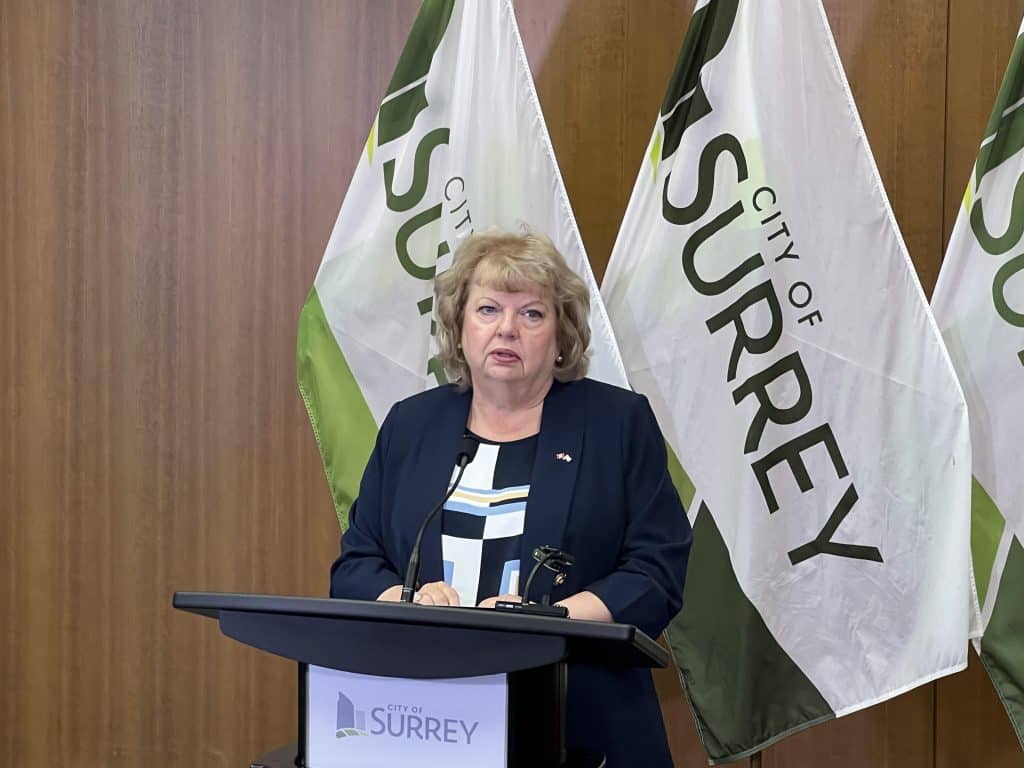
Mayor Brenda Locke wasn’t impressed.
“I am deeply disappointed that Metro Vancouver has once again avoided the meaningful, systemic and bold governance reform this region requires,” Locke said. “Capping every member jurisdiction at three directors may reduce the size of the board, but it does not address the longstanding representation issues. Metro Vancouver speaks of fairness, but Friday’s decision fails to deliver it.”
Under the new Metro Vancouver model, the size of the boards would grow more slowly over time, not even reaching the current size by the year 2050. If the change for the Regional District Board is approved by the province, the size and structure will automatically apply to Metro Vancouver’s water, sewerage and drainage, and housing corporation boards once enacted.
In addition to reducing board size, Metro Vancouver will:
Advance a select committee called “the Major Projects Oversight Board”: The Board began the process to create this committee to provide enhanced governance and oversight of Metro Vancouver’s largest and most complex water and wastewater infrastructure projects. The body would be made up of both elected officials and externally appointed directors with technical expertise in infrastructure delivery. The Board will receive more information in the coming months for decision.
Move towards a single sewerage area: Throughout the engagement period, there was strong support for moving from four sewerage areas to one sewerage area, with 92 per cent of Board Directors favouring a move to a single sewerage area through a managed, staged transition that is equitable and recognizes impacts to member jurisdictions and ratepayers. This would bring it in line with the single water area.
Surrey has long argued that Metro Vancouver’s weighted voting system falls far short of proportional representation. For example, Belcarra, with fewer than 1,000 residents, is guaranteed one vote, while Surrey has a population hundreds of times larger but will still have only 29 votes, the city argued.
“Real reform requires more than reducing a few seats at the table,” Locke said. “It requires a governance model that accurately reflects the communities it serves, as well as a serious effort to confront Metro Vancouver’s scope creep, rising costs, wasteful spending, and duplication of services. Friday’s decision fundamentally avoids those issues. Surrey residents deserve a system that ensures they have a real seat at the table. They deserve a Metro Vancouver that gets back to its mandate and gets out of Surrey’s way. I will continue to press for the reforms needed to achieve that.”
Getting “out of Surrey’s way” partially refers to restrictions on where development can take place in the city – Surrey has been attempting to remove some of its land from zone restricted by the Metro Vancouver growth strategy.
In summer 2025, Surrey – along with Delta and the Township of Langley – wrote to Metro Vancouver urging reform to the Urban Containment Boundary, saying it was “limiting their ability” to accommodate the region’s growing demand for housing and local jobs.
The UCB is a long-term, regionally defined area for urban development that focuses growth in this boundary to minimize urban sprawl and its negative impacts, protect agricultural, industrial, and ecologically important lands, and support the efficient provision of major regional transportation and infrastructure investments.
The UCB is “is obstructing our collective ability to plan for and deliver the housing, employment land and critical services our rapidly growing South-of-the-Fraser communities require,” the three cities wrote in the letter.
“South-of-the-Fraser municipalities will accommodate the largest share of the region’s future population and job growth — yet only a fraction of developable lands lie within the existing UCB,” said the letter. “The status quo is untenable; persisting with it will deepen the region’s housing shortage, constrain industrial expansion and undermine transportation investments.”
Author




Comments (0)
There are no comments on this article.