
Surrey a big part of scaling up B.C.’s social infrastructure
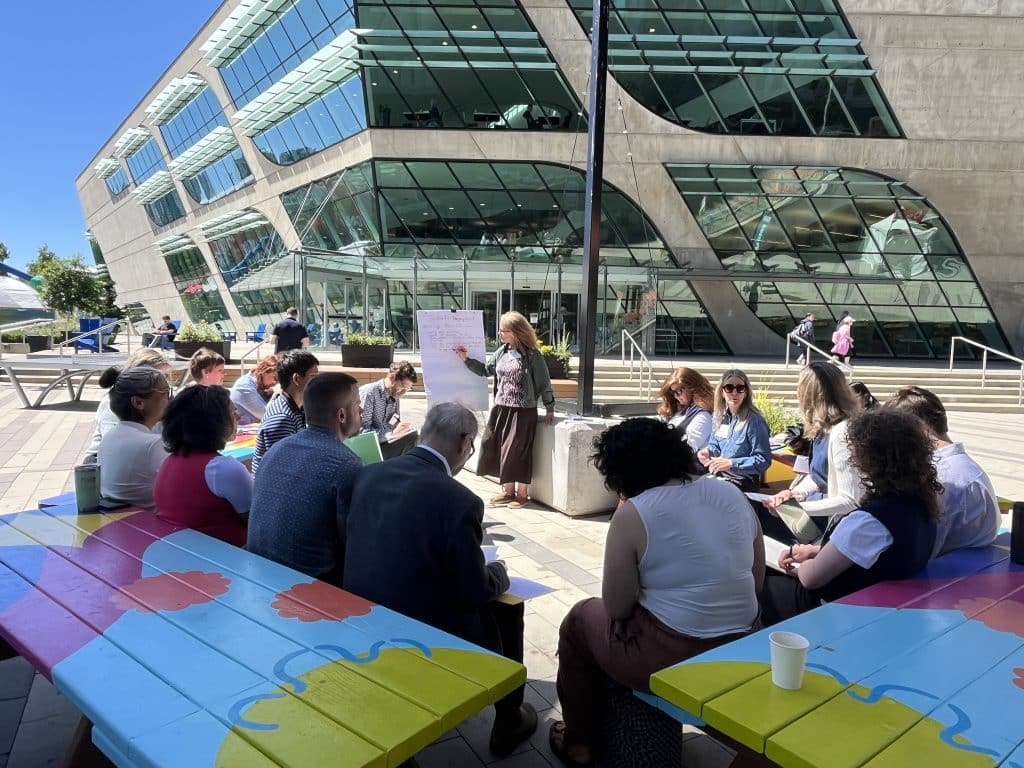
B.C’s social infrastructure is getting a re-examination with the launch of the Scaling up Social Infrastructure project.
The project brings together health authorities, regional districts, provincial ministries and 20 partner municipalities — including the City of Surrey — across the province to research social infrastructure. Over the next three years, the team will study social infrastructure to come up with policies, recommendations and budget changes to improve land use and create effective urbanism.
Meg Holden, professor of community planning and urban studies at Simon Fraser University, is the principal investigator of the SUSI project.
She described social infrastructure as places and services that allow people to connect within cities.
“If there’s a place that you love in the city that’s beyond your home or your private workplace, then it’s going to be social infrastructure,” said Holden.
This includes parks, community centres and libraries, to name a few.
Holden emphasized that despite these structures’ essential role in society, they are often undervalued and the aim of the project is to think more seriously about how to best provide this infrastructure.
SUSI’s kick-off event on June 16 took place at Surrey’s City Centre, which Holden said was a great location as the area is an example of carefully thought-out infrastructure to be a hub for the growing city. The day included visiting several groups who are doing important social infrastructure work in the centre.
Holden spoke about the Newcomer Welcome Centre, where librarians can help answer questions newcomers may have, and the StreetSMART program where city staff help people who do not have a regular place to stay and connect them with places to find food, clothing and jobs.
She also mentioned Foundry, a place designed for youth where they can access counsellors, support workers or even do homework and hangout, and the Surrey Women’s Centre which provides a place for women to turn when experiencing trauma.
On how the project came together, Holden explained that the past two years were spent bringing together all the different project partners. They were also successful in securing $260,000 from the Federal Granting Council for the next three years to support the project.
Holden said she’s worked on similar projects in the past and finds the work to be a “really important way for me as a researcher, to connect with real issues in the community.”
“I’ve always found it to be super enriching, it’s not just dryly collecting facts and reporting on data,” Holden said. “It’s really a way to improve my own sense of the place where I live and to create channels for impact.”
The project will be using three different research approaches. The first being identifying existing social infrastructure and mapping its size and placement. Another method is finding specific case-studies to examine design qualities, financing, governance and alignment with community values. The final approach is surveying impact and adequacy, which would include questioning users to see if they know what services are at a location and their connection to place, among other things.
When asked what aspect of B.C.’s infrastructure has been underinvested in over the years, Holden said parks, specifically explaining that the development of parks may be stuck in the past.
“We’re starting to see more needs for parks to be rethought in order to keep us resilient to climate change, so adding more places for shade, different kinds of trees that can be resistant to the heat,” explained Holden.
She added childcare, noting that everyone knows that there aren’t enough spaces to meet demand, but that often centres are not located in convenient places like near transit. “Childcare that’s in proximity to schools is a no-brainer, and yet it’s actually fairly unusual. Hopefully, that is changing now with some changes in policy, but somehow it still needs a boost,” she said.
Holden also pointed out that many older apartment and strata buildings have amenity spaces, but are underutilized. She said the spaces often remained locked off when others in the community could use them for a host of reasons from dance practices, meeting spaces or simply gathering with friends to play cards.
“There are some of these vacant spaces that could be put to more use as annexes to community centers, but we need better agreements for what that would look like to share with people from outside of the building.”
Another example of untapped infrastructure Holden provided was building complexes with swimming pools.
“Those swimming pools are very expensive to maintain, but they don’t necessarily get used effectively. Whereas there are lots of people who are also looking for swimming lessons, so there could be effective partnerships to be created,” she said.
Over the course of the project, Holden is looking forward “to hearing more stories about those real moments of attachment that make people feel at home … because I think there are really important lessons there in terms of building an inclusive community and putting our public investment where it matters most.”
She said coming together to construct an argument for change that is impossible to ignore is vital. “Social infrastructure doesn’t sit within any one politician’s responsibility function,” said Holden. She wants to find solutions that don’t allow politicians to throw blame onto each other and simply kick the bucket further down the road.
“If we do our job right, so that across these different functions there’s a shared stake, and there should be a shared commitment to make the change.”
Author



Comments (0)
There are no comments on this article.