
Study launched to find microplastics in Fraser River
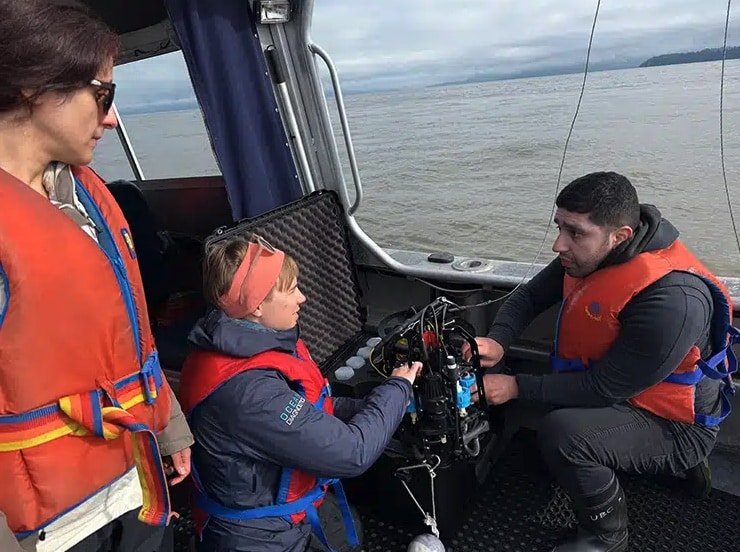
Researchers are sampling the Fraser River at different depths as part of a new project aimed at figuring out where microplastics end up after entering one of B.C.’s most important waterways.
Ocean Diagnostics announced it is collaborating with researchers at the UBC’s Faculty of Applied Science to collect microplastic samples at multiple sites from the Fraser River estuary into the Strait of Georgia.
The field data will be used to test a computer model designed to estimate where microplastics accumulate, with researchers hoping the work could eventually help identify where pollution-control efforts would be most effective.
“This project connects what we see in the field with what we can predict through modelling,” said Dr. Mona Rahmani, a UBC biochemical engineering researcher. “That means we can move beyond simply detecting microplastics and begin identifying where they come from, how they travel and where interventions will have the greatest impact.”
One of the challenges researchers are trying to address is that microplastics don’t necessarily remain near the surface. Rahmani and fellow UBC researcher Dr. Johan Foster are using Ocean Diagnostics’ Ascension sampler, a 22-pound portable device that can collect filtered microplastic samples at depths of up to 400 metres.
Researchers say that could provide a more complete picture than sampling primarily at the surface.
“In theory, microplastics are light and should float, so a lot of research has been done at the surface of the water,” Rahmani said. “In reality, they are quite sticky and attach to other particles, like sand and heavy silt particles, that weigh them down.”
The researchers’ hypothesis is that some of that plastic eventually accumulates in river and ocean sediments. Samples collected during the project will also be analyzed at Ocean Diagnostics’ laboratory to determine the abundance and types of plastic polymers present.
That question of where plastic goes after entering waterways has been a longstanding gap in microplastics research.
A 2017 study published in Environmental Research Letters developed a theoretical model estimating that 99.8 percent of the plastic that entered the world’s oceans between 1950 and 2016 had settled below the ocean surface layer by 2016.
The researchers cautioned that the model was theoretical and conceptual because detailed data on plastics at different depths were not available. But the study suggested there could be a large amount of microplastic below the surface and called for greater attention to deeper-water and seafloor environments.
The new Fraser River sampling could help provide some of the kind of field data needed to test those ideas at a local level.
A 2024 report by Ocean Diagnostics and the Raincoast Conservation Foundation similarly found significant gaps in understanding how microplastics and microfibres move through Canadian waterways.
The report notes that rivers can both carry micro-debris from urban areas toward the ocean and act as reservoirs where it accumulates. Factors including wastewater treatment plants, currents, turbulence and the shape of waterways can influence where microplastics sink and collect in bottom sediments.
Microfibres – tiny fibres shed from clothing and other textile products – make up a particularly large share of the problem. The report estimated they account for about 80 percent of microplastic particles reported across Canadian water, soil, wildlife, air and wastewater samples.
Laundry is one significant source. The report estimated Canadian households release about 1,920 tonnes of microfibres through washing each year, with about 264 tonnes passing through municipal wastewater treatment plants and entering rivers, lakes and oceans. Another estimated 35 tonnes enter waterways through untreated wastewater.
Stormwater runoff, industrial activities and other sources can also contribute microplastics to waterways.
The Fraser River project is part of broader work involving Ocean Diagnostics and the National Research Council of Canada on microplastics monitoring.
Foster said the challenge isn’t simply establishing that microplastics are widespread, but figuring out where the pollution is concentrated.
“Microplastics are everywhere, but our ability to act is limited by a basic knowledge gap: we still do not know where they accumulate, how they move or which parts of our waterways are most at risk,” he said. “That is what this work is designed to change.”
– Story by Patrick Penner



Comments (0)
There are no comments on this article.